People’s Medical Hospital CEO, Representing the Katikkiro of Buganda, Calls for Collective Action Against Sickle Cell Disease at the 5th Uganda Sickle Cell Convention
July 2026 | People’s Medical Hospital – Gayaza
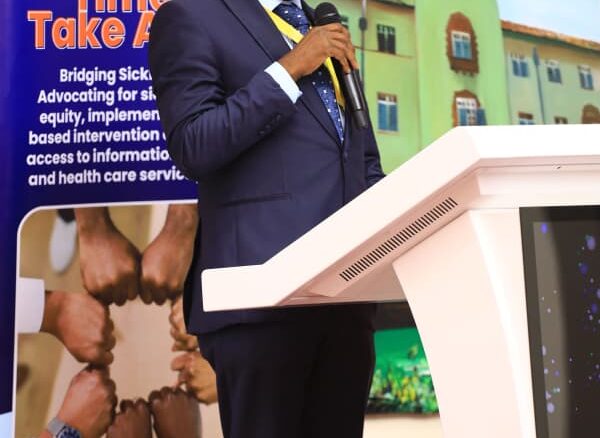
The Chief Executive Officer of People’s Medical Hospital, Dr. Frank Ndugga, has called for stronger collaboration among government, healthcare providers, cultural institutions, development partners, and communities to build sustainable support systems for people living with sickle cell disease across Uganda.
Dr. Ndugga made the remarks while representing the Katikkiro of Buganda, Owek. Charles Peter Mayiga, at the 5th Uganda Sickle Cell Convention, where he delivered the Kingdom’s official message to hundreds of delegates gathered for the national event.
Addressing government officials, healthcare professionals, development partners, parents, caregivers, sickle cell warriors, and representatives from various organizations, Dr. Ndugga conveyed warm greetings from the Katikkiro, who was unable to attend due to official commitments. He reaffirmed the Buganda Kingdom’s continued commitment to improving public health and supporting initiatives that address the burden of sickle cell disease.
The convention, held under the theme “Building Sustainable Sickle Cell Support Systems in Uganda and Beyond Using a Multisectoral Approach,” focused on strengthening partnerships that improve prevention, diagnosis, treatment, advocacy, and long-term care for individuals living with sickle cell disease.
A Growing Public Health Challenge
During his address, Dr. Ndugga emphasized that sickle cell disease remains one of Uganda’s most significant public health concerns.
He noted that Uganda continues to rank among the countries with the highest burden of sickle cell disease globally. Every year, thousands of children are born with the condition, and without timely diagnosis and structured medical care, many lose their lives before reaching their fifth birthday.
He observed that behind every statistic is a family facing emotional, social, and financial challenges. Children living with sickle cell disease often experience repeated episodes of severe pain, recurrent infections, anaemia, organ complications, and frequent hospital admissions, making access to quality healthcare an urgent necessity rather than a privilege.
Recognising Partners Saving Lives
Dr. Ndugga commended Raising Hope International Friends (RHIF) for its outstanding contribution to sickle cell awareness and screening programmes across Uganda.
He acknowledged that the organization’s community-based efforts have enabled more than 15,000 individuals to undergo sickle cell testing, demonstrating the impact that strategic partnerships can have in reducing disease burden and improving early diagnosis.
He noted that collaboration between healthcare providers, community organizations, and cultural institutions continues to provide hope to thousands of Ugandan families affected by the disease.
Buganda Kingdom’s Commitment to Public Health
Speaking on behalf of the Katikkiro, Dr. Ndugga highlighted the Buganda Kingdom’s longstanding contribution to public health promotion.
He recalled that the Kabaka Birthday Runs held in 2017, 2018, and 2019 focused specifically on sickle cell disease, significantly increasing national awareness while mobilizing resources for screening programmes.
Through these initiatives, over UGX 200 million was dedicated to the purchase of sickle cell testing kits, resulting in the procurement and nationwide distribution of more than 80,000 screening kits through the Ministry of Health’s Central Public Health Laboratories.
He further explained that the Kingdom utilized its extensive grassroots leadership structures, alongside media platforms such as CBS and BBS, to educate communities, reduce stigma, encourage testing, and promote informed health decisions throughout Buganda and beyond.
Breaking Myths and Expanding Access to Care
Drawing from his experience as Head of the Health Department for Kyadondo County and CEO of People’s Medical Hospital, Dr. Ndugga observed that many families continue to struggle with limited access to specialized sickle cell services.
He pointed to challenges including shortages of essential medicines, limited laboratory monitoring services, inadequate access to blood transfusions, and the long distances many patients travel to receive specialized care.
He also emphasized the need to eliminate misconceptions surrounding sickle cell disease.
According to Dr. Ndugga, sickle cell disease is neither a curse nor a result of witchcraft. Rather, it is an inherited genetic condition that can be prevented through informed reproductive decisions, detected through early screening, and effectively managed with appropriate medical care.
He stressed that improving public understanding remains one of the most powerful tools in reducing stigma and encouraging families to seek timely medical attention.
A Shared Responsibility
Throughout his speech, Dr. Ndugga emphasized that sustainable progress can only be achieved through collective action.
He explained that government alone cannot overcome the burden of sickle cell disease. Success requires coordinated efforts involving healthcare providers, cultural institutions, schools, religious leaders, civil society organizations, development partners, private sector stakeholders, and local communities.
He encouraged greater investment in community education by empowering trusted institutions to provide awareness, counselling, referrals, and ongoing support for affected families.
Three Calls to Action
On behalf of the Katikkiro of Buganda, Dr. Ndugga presented three key recommendations aimed at strengthening Uganda’s response to sickle cell disease.
First, he encouraged young people and intending couples to make genotype testing an essential part of premarital preparation, enabling them to make informed decisions about their future families.
Second, he urged healthcare providers and partners to decentralize specialized sickle cell services so that quality care—including counselling, newborn screening, routine follow-up, pain management, infection prevention, and access to essential medicines—is available closer to where people live.
Finally, he appealed to policymakers and development partners to increase investment in sustainable interventions such as subsidized medication, reliable blood donation services, healthcare worker training, community awareness programmes, and psychosocial support for caregivers.
People’s Medical Hospital’s Commitment
As a healthcare institution committed to improving the wellbeing of communities, People’s Medical Hospital fully supports initiatives that promote prevention, early diagnosis, quality treatment, and public education on sickle cell disease.
The hospital remains dedicated to working alongside government agencies, cultural institutions, civil society organizations, and development partners to strengthen healthcare delivery and improve health outcomes for individuals and families affected by sickle cell disease.
Looking Ahead
Concluding the address, Dr. Ndugga reaffirmed the Buganda Kingdom’s commitment to continuing its partnership with the Ministry of Health, Raising Hope International Friends, and all stakeholders working to reduce the burden of sickle cell disease.
He also expressed appreciation to His Majesty Ssaabasajja Kabaka Ronald Muwenda Mutebi II for his exceptional leadership in championing sickle cell awareness and public health initiatives.
Dr. Ndugga concluded with a message of hope, calling upon all Ugandans to work together toward a future where every child born with sickle cell disease is given the opportunity not only to survive but to live a healthy, productive, and fulfilling life.